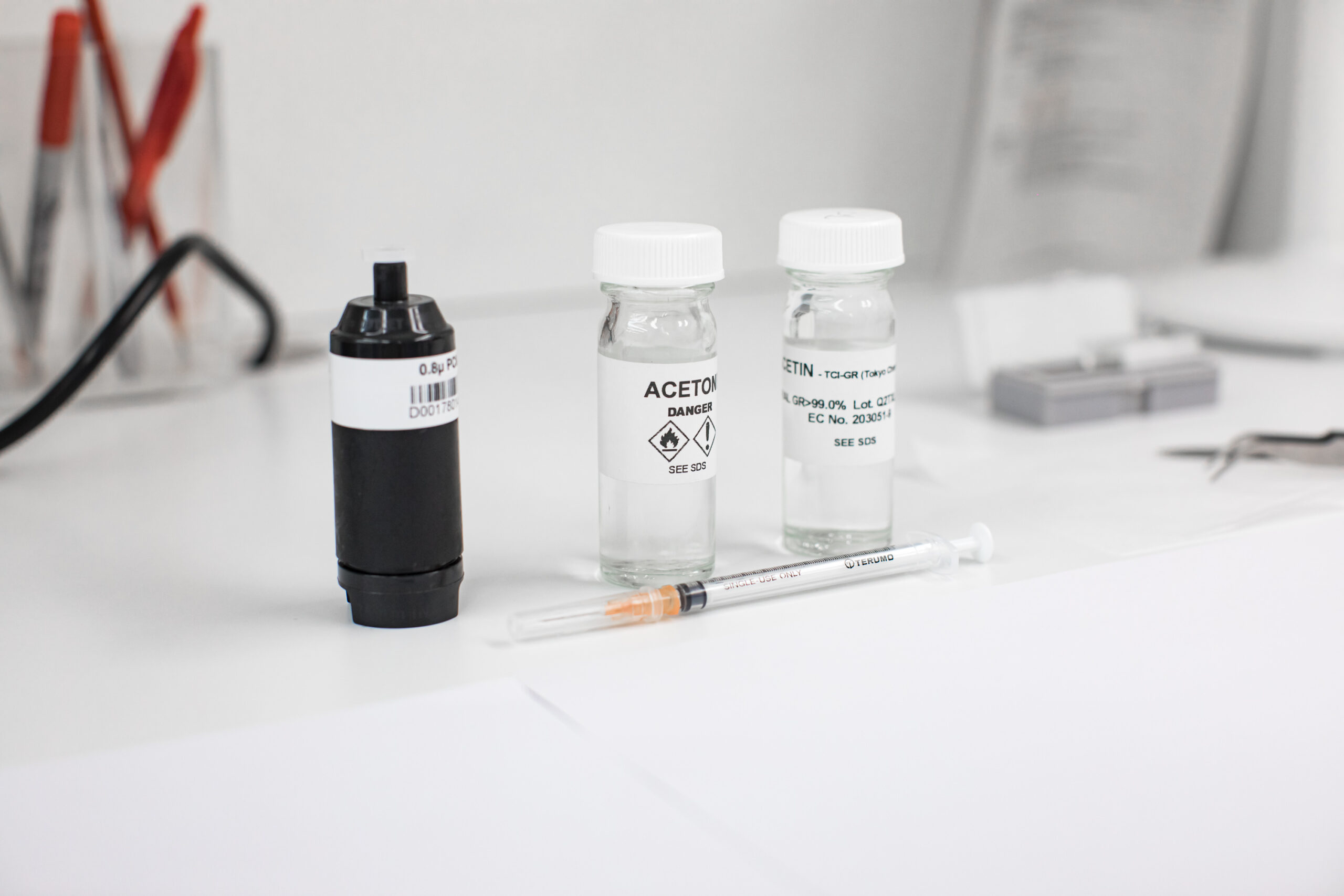
Asbestos Air Monitoring
If you need professional asbestos air monitoring across Sydney and the Central Coast, Health Safety Consultants provide reliable monitoring and compliance solutions. Our qualified specialists conduct NATA-accredited asbestos air testing, fibre monitoring, and clearance assessments to help businesses meet regulatory requirements, control airborne asbestos risks, and maintain safe, compliant, and audit-ready environments.
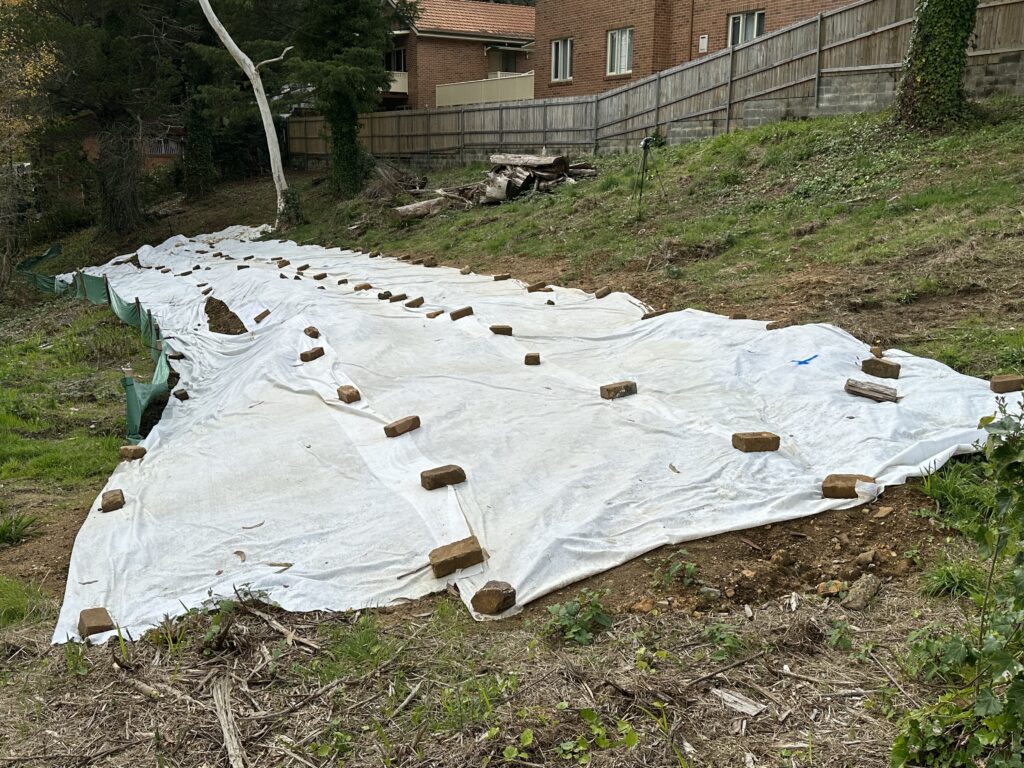
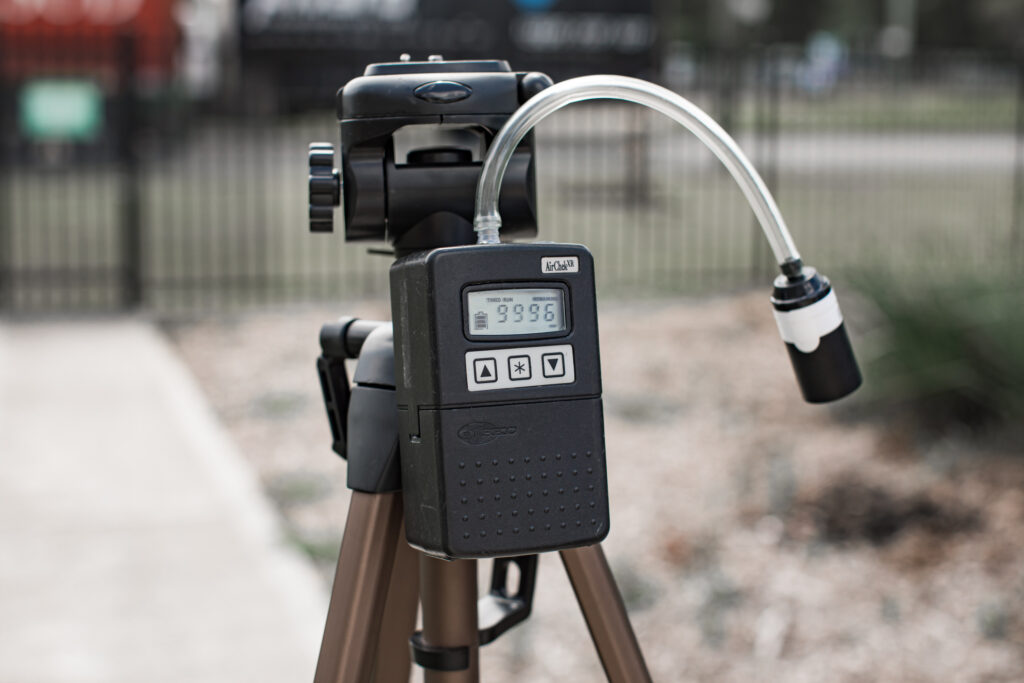
NATA Accredited Airborne Asbestos Fibre Sampling & Fibre Counting
When Asbestos Air Monitoring is Required?
Asbestos air monitoring is essential for assessing airborne asbestos fibres and ensuring safety during removal or disturbance. All testing must comply with NOHSC:3003 (2005) and be conducted by a NATA-accredited laboratory under the supervision of a Licensed Asbestos Assessor, occupational hygienist, or competent person.
Monitoring is required in the following situations:
- Background Monitoring – Conducted in occupied areas where asbestos fibres may be released into the air. Supports risk assessments from asbestos inspections or surveys and helps determine urgency for removal or treatment of unstable or deteriorated asbestos-containing materials.
- Control & Clearance Monitoring – Friable asbestos removal: mandatory for all work, including background monitoring before removal, control monitoring during removal, and clearance monitoring prior to dismantling enclosures and final clearance before re-occupancy.
- Non-friable asbestos removal (>10 sqm): not mandatory, but recommended if work occurs near public areas or as determined by a risk assessment. Ensures that removal activities are safe and that the area is cleared for re-occupancy.
- Exposure Monitoring – Performed within the worker’s breathing zone to quantify exposure to airborne asbestos fibres. Evaluates whether existing control measures, including respiratory protection, are adequate.
Particularly important if:
- New or modified work methods may increase exposure.
- Control measures have deteriorated due to poor maintenance.
- An uncontrolled disturbance of asbestos has occurred.
Using licensed assessors and NATA-accredited laboratories guarantees compliance with Australian standards, delivers reliable results, and protects workers, occupants, and the public from asbestos exposure.
Who is Responsible for Arranging Air Monitoring for Asbestos Removal
Under the Work Health and Safety Regulation 2017, the person commissioning asbestos removal at a workplace must arrange a Licensed Asbestos Assessor (e.g., occupational hygienist) independent of the removal contractor to determine air monitoring requirements.
For domestic premises, the person engaged to carry out the removal must arrange a competent person, also independent of the removalist, to determine the required asbestos air monitoring.
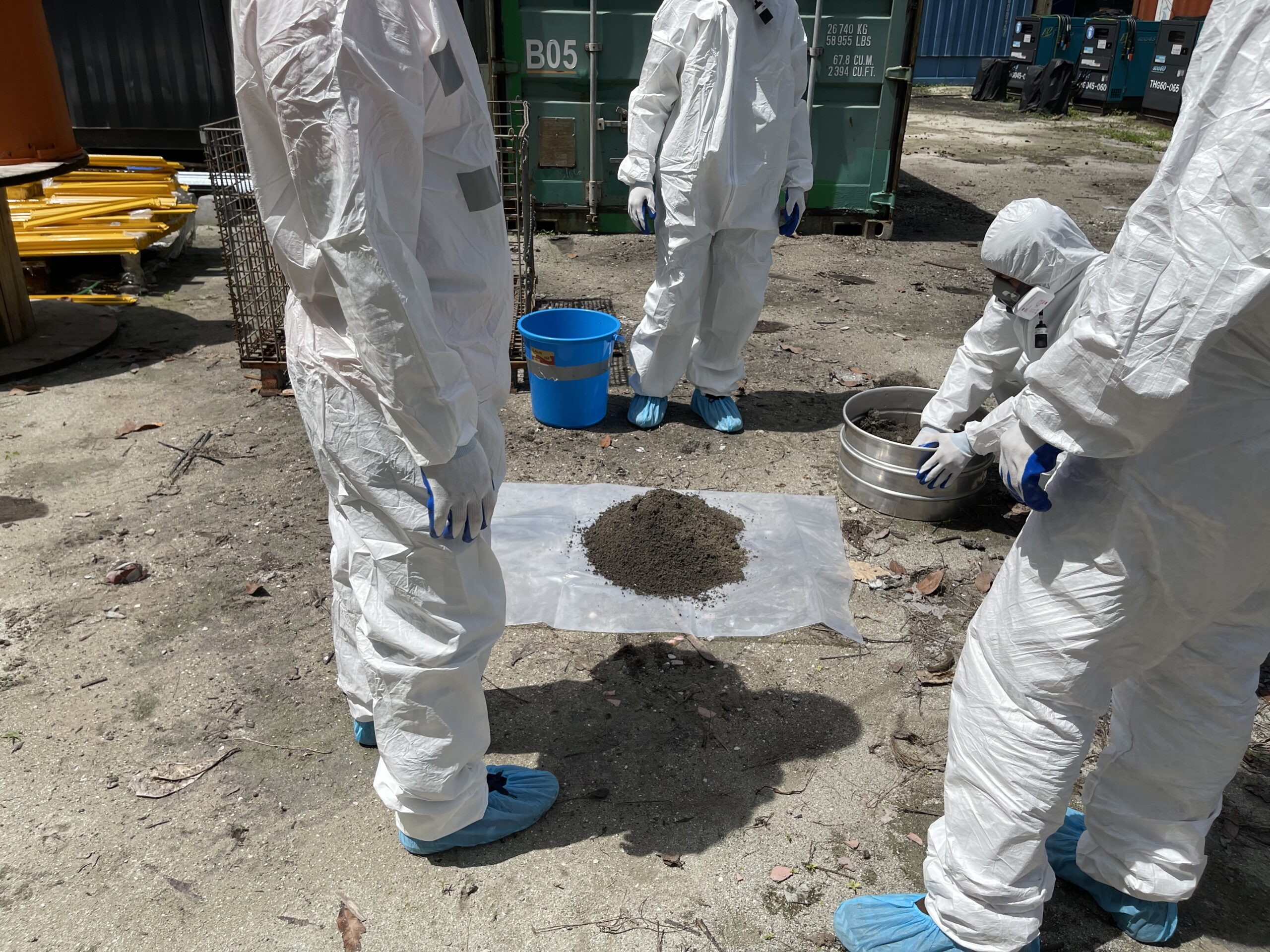
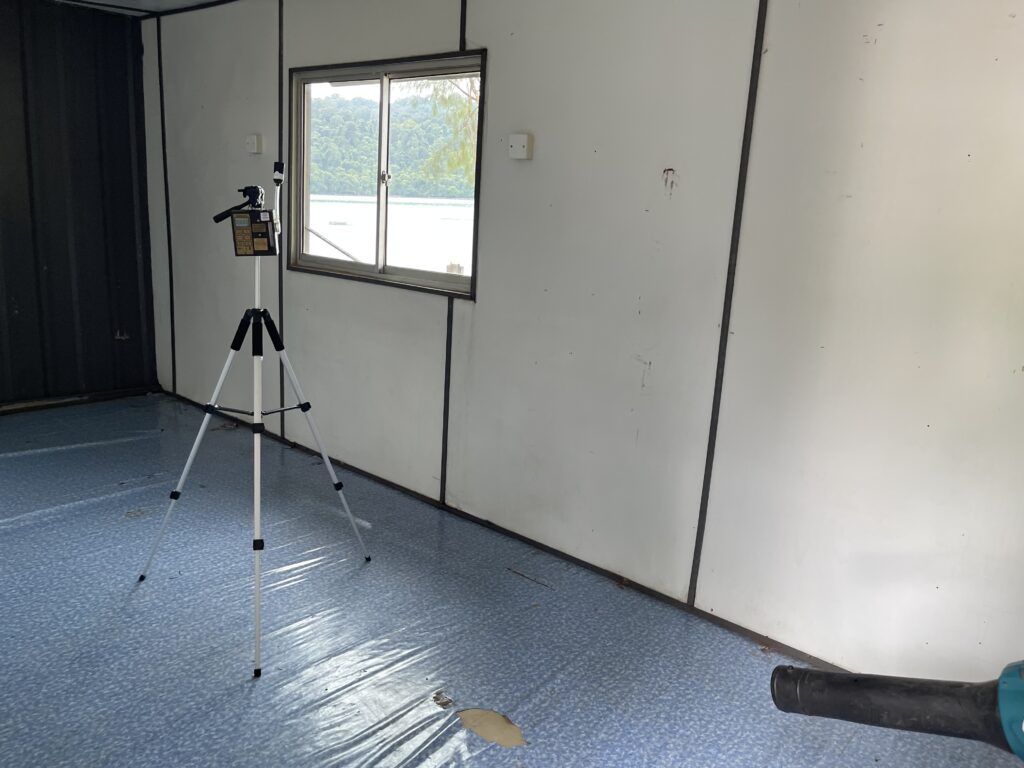
Who Can Do the Asbestos Air Monitoring?
Friable asbestos – a person who commissions asbestos removal work that requires a Class A licence (friable asbestos) must ensure that an independent licensed asbestos assessor undertakes asbestos air monitoring of the asbestos removal area at the workplace
Non-friable asbestos removal (more than 10 sqm) – an independent licensed asbestos assessor or competent person must be engaged to carry out asbestos air monitoring when it is required
Other situations – where asbestos air monitoring is required in any other case (eg. to determine whether the exposure standard has been exceeded following an uncontrolled disturbance or release of asbestos at the workplace), an independent licensed asbestos assessor or competent person may carry it out if the materials disturbed is non-friable. If the release involves friable asbestos, only an independent licensed asbestos assessor can carry out the air monitoring.
How Long is the Asbestos Air Monitoring Session?
Background asbestos air monitoring – the duration of the session may vary. However, a minimum of 400 litres of air volume must be collected per sample. Usually, the duration should not be less than 4 hours
Asbestos control air monitoring – must start before the removal work start and stop after the asbestos removal work finishes
Clearance asbestos air monitoring – the duration of the session may vary. However, a minimum of 400 litres of air volume must be collected per sample. Usually, the duration is around 2 hours
Asbestos exposure air monitoring – must be done within the breathing zone of the worker and for the entire or not less than 60% of the shift duration. A minimum of 400 litres of air volume must be collected per sample.
Contact our office for all your requirements for asbestos air monitoring.
- Australian Standard AS4801 audit criteria.
- Federal safety commissioner and state government accreditation schemes for construction projects.
- Workplace / area specific health & safety compliance OHS audits to Codes and standards.